
Aortic Dissections Treatment in Faridabad
Aortic Dissections
Aortic Dissections
The aorta is the largest and most important artery in the body. It carries oxygen-rich blood from the heart to the brain, organs, and the rest of the body. An aortic dissection is a serious and life-threatening condition involving a tear in the inner wall of the aorta. This article explains aortic dissections in simple language to help patients and families understand the condition, recognize symptoms early, and know the available treatment options.
What Is an Aortic Dissection?
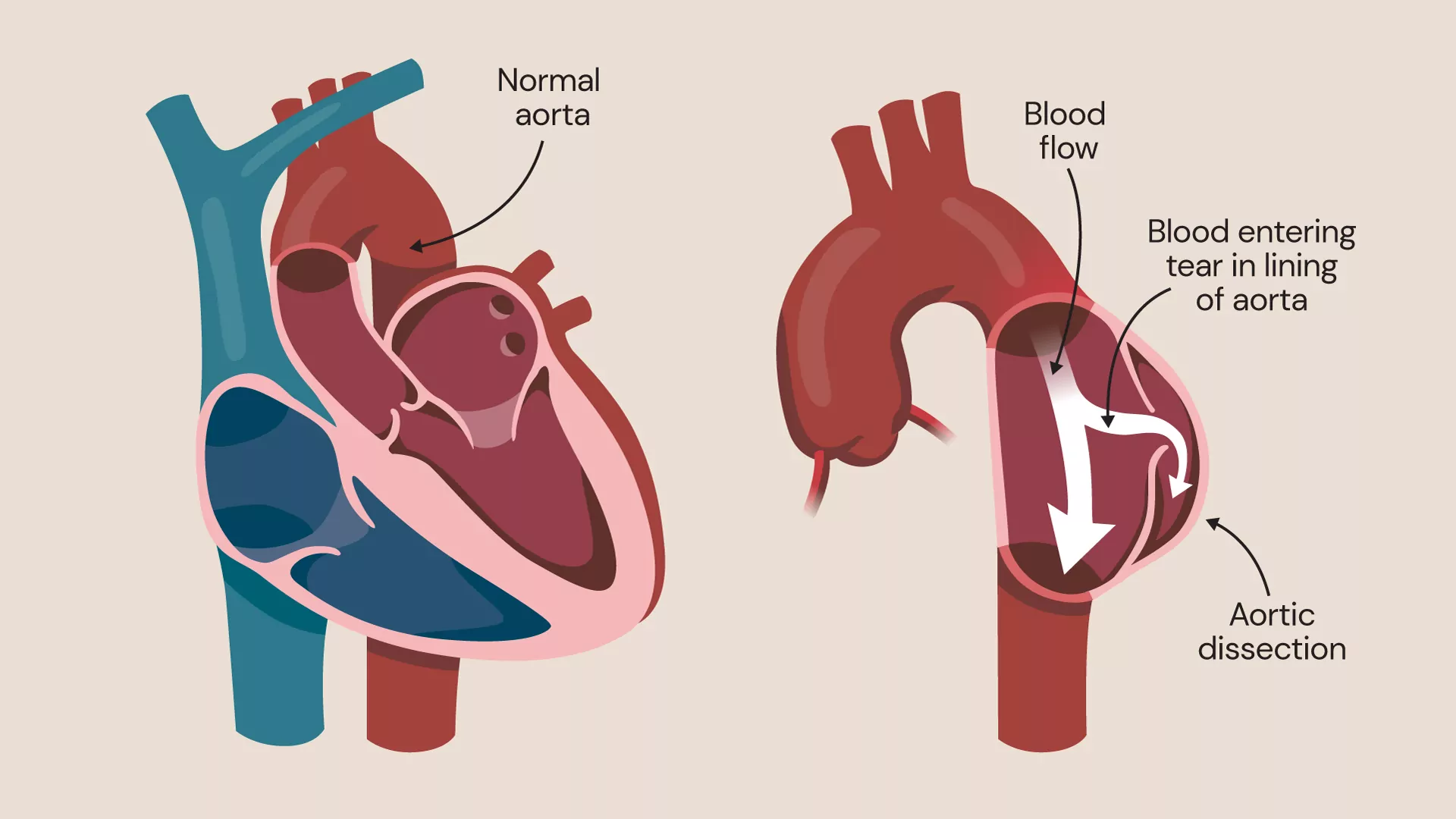
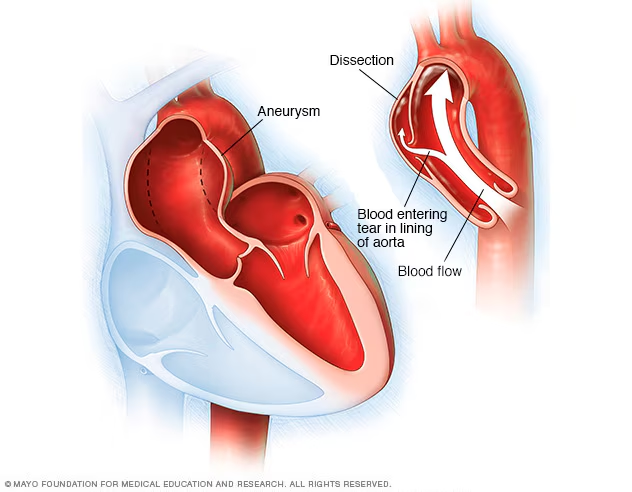
The wall of the aorta is made up of three layers. An aortic dissection occurs when a tear develops in the inner layer, allowing blood to enter between the layers. This causes the layers to separate (or "dissect") and creates a false channel for blood flow.
Why Do Aortic Dissections Occur?
Aortic dissections usually happen when the aortic wall becomes weak. Common risk factors include:
- High blood pressure (hypertension) – the most common cause
- Atherosclerosis (hardening of the arteries)
- Connective tissue disorders such as Marfan syndrome or Ehlers-Danlos syndrome
- Congenital heart conditions, including bicuspid aortic valve
- Aortic aneurysm (abnormal enlargement of the aorta)
- Trauma, such as severe chest injury
- Pregnancy, especially in women with underlying aortic disease
- Smoking and long-standing lifestyle-related risk factors
Types of Aortic Dissection
Doctors commonly classify aortic dissections using the Stanford system:
Type A Aortic Dissection
- Involves the ascending aorta (the portion closest to the heart)
- This is a medical and surgical emergency
- Requires urgent surgery in most cases
Type B Aortic Dissection
- Involves the descending aorta (away from the heart)
- Often managed with medications initially, unless complications develop
Understanding the type of dissection is crucial because it determines the treatment approach.
Symptoms of Aortic Dissection
Symptoms often begin suddenly and can be severe. Common symptoms include:
- Sudden, severe chest pain described as tearing, ripping, or sharp
- Pain that may move to the back, neck, or abdomen
- Shortness of breath
- Sweating and anxiety
- Fainting or dizziness
- Weakness or paralysis on one side of the body (if blood flow to the brain is affected)
- Reduced urine output or abdominal pain (if organ blood supply is compromised)
Because symptoms can resemble a heart attack or stroke, immediate medical attention is critical.
How Is Aortic Dissection Diagnosed?
Early and accurate diagnosis saves lives. Tests may include:
- CT angiography (CT scan) – the most commonly used and rapid diagnostic test
- Echocardiography, especially transesophageal echo (TEE)
- MRI, used in stable patients
- Chest X-ray, which may show a widened aorta but is not definitive
- Blood pressure and pulse checks in both arms to detect differences
Doctors choose tests based on urgency and patient stability.
Treatment of Aortic Dissection
Emergency Care
Immediate stabilization is essential. This includes:
- Pain control
- Strict blood pressure and heart rate control
- Continuous monitoring in an intensive care unit (ICU)
Surgical Treatment
- Type A dissections usually require emergency open-heart surgery
- Surgery involves removing the torn portion of the aorta and replacing it with a synthetic graft
- In some cases, the aortic valve may also need repair or replacement
Medical and Endovascular Treatment
- Type B dissections are often treated with medications to control blood pressure
- Endovascular stent grafting (TEVAR) may be used if complications occur, such as reduced blood flow to organs, persistent pain, or risk of rupture
The treatment plan is tailored to each patient's condition.
Recovery and Life After Aortic Dissection
Recovery depends on the type of dissection and treatment received. After treatment:
- Lifelong blood pressure control is essential
- Regular follow-up imaging (CT or MRI scans) is required
- Medications such as beta-blockers are commonly prescribed
- Physical activity should be gradually resumed as advised by the doctor
- Smoking cessation and heart-healthy lifestyle changes are strongly recommended
Many patients can return to a good quality of life with proper medical care and monitoring.
Possible Complications
Without timely treatment, aortic dissection can lead to:
- Aortic rupture
- Stroke
- Heart attack
- Kidney failure
- Reduced blood supply to the legs or intestines
Even after treatment, long-term follow-up is important to detect late complications.
When Should You Seek Immediate Help?
Call emergency services immediately if you or someone else experiences:
- Sudden, severe chest or back pain
- Fainting or collapse
- Sudden weakness, speech difficulty, or vision problems
- Unexplained severe shortness of breath
Early treatment can be life-saving.